…because it’s obvious some people still don’t get it. Let me try and see if I can help.
(P.S. I lied. This lesson will be anything but brief. I don’t know if any lesson on racism can be. But as a side note, here’s my full disclosure: I don’t think I’ve ever been able to write anything brief in my whole entire life, just so you know.)
What is racism? It has become blatantly apparent to me that some people don’t know, so I shall ambitiously endeavor to explain.
For a while, I wondered if I could tackle this in just one blog post. Then I wondered if I can tackle this, let alone in one blog post. Can I tackle this period? Who am I to tackle racism? I realize that my Blackness doesn’t make me an expert. But I will try anyways. Someone has to, even if the attempt falls short. Let this blog post serve as a primer.
A few recent incidents prompted me to write this post.
Over the past few years, I’ve been teaching English to third and fourth-graders. In my grade three class, I remember using Barack Obama as an example for something, and I said, “Barack Obama is the first Black president of the United States.” Many of the students gasped and said, “That’s racist!!”
On another occasion, in my grade four class, I was giving them a spelling test. I think the word to spell was “majority.” Like I did with all of the other words, I used the word in a sentence: “The majority of the students in this class have black hair.” One student piped up and said, “Yeah, because most of them are Chinese!” That is true – many of the children in my class were Chinese. Even though it was still a test (!!! – they are so easily distracted! Ugh!) other students started to chime in and talk about the racial diversity in our class. I said something to the effect of, “…and I’m the only Black person here. And I have black hair.” The student who had first blurted out her comment said, “Well…I didn’t want to be racist…”
Many thoughts went swimming through my head. Since when is talking about race racist? Better yet, since when is talking about being Black racist? Why is it only “racist” when Blackness is mentioned? How and why have these nine-year-olds internalized the message that mentioning race is inherently problematic or just plain bad (especially when it comes to Black people)?
So I knew from my brief stint of teaching that we need to have frank discussions of race in schools and with our children. However, I soon came to realize that adults need instruction too.
In bar school, the guy who sat beside me and I had to calculate the child support payment and compensatory allowances of the parents during an in-class exercise. We both had to role play being the counsel for the divorcing parties. I remember saying something about how his client’s offer was not enough. And opposing counsel, in jest (because, of course, these things always happen in jest) said, “Elle pourrait aller coucher avec un homme noir…” (She could go sleep with a Black guy, insinuating if she got into financial hardship, some Black guy would take care of her).
And this coming from someone who is going to be a future lawyer…
I still kick myself for chuckling nervously instead of pointing out that what he said was racist.
The need for education runs deep.
I also wouldn’t have been so unnerved if I hadn’t seen the following comments from adults online:
On a Yahoo! article about the first black police chief in Toronto, one person commented, “To say he is the first Black police chief is racist. Why is his race even important?”
On an article about the “Black Girls Rock” TV show on BET, someone else wrote, “That’s racist! We could never have a show called White Girls Rock.”
Sigh. Context my friends. Context.
So here we are. I live in a society that sees colour blindness as an appropriate response to racism, as Mellody Hobson talks about here:
We’ve been taught to tiptoe around race, so as not to awaken the big, scary, sleeping, incendiary race giant.
We desperately lack race literacy on a whole. And we cannot combat racism if we don’t even know what it is and what it looks like, or if we are afraid to call it by its rightful name and confront it. In the sage words of Dr. Phil, “you can’t change what you don’t acknowledge,” and, I would add, you can’t change what you refuse or don’t even know exists. If we don’t know what racism is, we won’t be able to identify when it occurs and thus challenge and change it.
What is Racism?
So what is racism?
According to Google
rac·ism
ˈrāˌsizəm/
noun
- the belief that all members of each race possess characteristics or abilities specific to that race, especially so as to distinguish it as inferior or superior to another race or races.
- prejudice, discrimination, or antagonism directed against someone of a different race based on the belief that one’s own race is superior.
“a program to combat racism”
synonyms: racial discrimination, racialism, racial prejudice, xenophobia,chauvinism, bigotry, casteism
“Aborigines are the main victims of racism in Australia”
According to Merriam Webster
Full Definition of RACISM
1: a belief that race is the primary determinant of human traits and capacities and that racial differences produce an inherent superiority of a particular race
2: racial prejudice or discrimination
— rac·ist \-sist also -shist\ noun or adjective
Racism, simplified then, is the perpetuation of the belief of superiority and the application of a stereotype or stereotypes based on race. There are many tools used to enforce stereotypes and superiority, such as discrimination and prejudice (in essence “pre-judging” someone), differential treatment and preferential treatment. If we keep this simple definition in mind (“superiority,” “stereotype”) then it also becomes rather simple to see what is racist and what isn’t.
I’d also like to note that the stereotypes can be good or bad and still be racist:
“All Chinese people are bad drivers.” <– Racist
“You’re Chinese, so you must be good at math.” <– Racist
“A tall, Black guy like you has to be on the basketball team.” <– Racist
*Clutching my purse as Black man walks buy* <–Racist
Internalized racism, horizontal racism, systemic racism — it’s all racism. Racism comes in many different iterations or variations.
The actors are not always one group against another or one person against another; sometimes it’s one person against themselves. But it’s always about superiority and stereotypes.
Let’s take internalized racism for example. When I was in kindergarten, our class had a baby doll to play with. She was black. The other kindergarten class across from us also had a baby doll. She was white. Because we thought that the white doll was prettier than the black doll we had, a group of us (including my little black self) would often perform a secret sting operation and sneak over to the other kindergarten class to exchange dolls. This is internalized racism. Even as a four year old, I had internalized the message that black is ugly and white is beautiful. I had internalized the message of white as superior.
This hadn’t even occurred in the 1890’s. This happened in the early 1990’s.
Here are some helpful videos about racism and what it is to help drive my point home:
Now that we understand all of this, it becomes clearer to see what is racist and what isn’t. Let’s take some present day examples that appear to have tripped up a lot of people for some strange reason:
What is Not Racist?
Black Girls Rock
Black Girls Rock is not racist, because the assertion is not that Black girls are better than another one else. The idea is Black girls rock too. Here, context is key. Black girls have historically been told that they don’t rock and this message has been transmitted against a historical backdrop of white supremacy. Oliva Cole explains this brilliantly in “Why I’m Not Here for #WhiteGirlsRock” and “This is Why We Still Don’t Need White Girls Rock.”
#BlackLivesMatter
#Blacklivesmatter. Yes, we know full well that #alllivesmatter. That should be obvious. But exclaiming #blacklivesmatter is not racist. We’re not saying #blacklivesmatter to the exclusion of all other lives. We’re just saying #blacklivesmatter too, because these Black lives always seem to be forgotten or neglected. We want our lives to be as valued just as much as the lives of everyone else.
Once again, context. Here, the context is the phenomenon of the multiple deaths of Black people at the hands of people sworn to serve and protect.
Here’s a really good explanation about #blacklivesmatter on Reddit.
The appointment of Police Chief Mark Saunders
For the record, just because someone highlights race doesn’t mean it’s racist. It depends on the purpose. There is a difference between highlighting race to uplift and encourage, highlighting race to subjugate other groups, and highlighting race in order to invoke and enforce a stereotype. Here, race was highlighted because Toronto, the largest city in Canada and although a multicultural city, has never had a police chief of colour.
Being critical of racial issues and using words like “White supremacy” and “White privilege” is also not racist. It just means you are critical.
What is Racist?
The following are only but a few contemporary examples:
Racial profiling (anywhere) and police carding in Toronto
Police in Toronto, up until recently, were stopping “suspicious” people on the streets and in cars and collecting information on them such as age, race, and residence. Unsurprisingly, the great majority of the people carded were young, male and racialized. As many have said, the practice of carding in Toronto is racist and discriminatory. Desmond Cole writes brilliantly of his lived experience here.
Blackface incidences on university campuses (Universite de Montreal, Brock University etc. – it’s so sad I actually have to write etcetera on this one because there are so many instances)
Remember our discussion of stereotypes? Blackface enforces negative stereotypes. Blackface is form of theatrical makeup used by performers to represent a black person in a satirical way. The practice gained popularity during the 19th century in minstrel shows and contributed to the proliferation of stereotypes about Black people. White actors in Blackface often overemphasized the facial features of a typical person and the character played was often a simple-minded caricature.
In other words, blackface, since it is rooted in racism, is racist.
University of Oklahoma SAE chant
Racist. Singing a song that encourages violence towards a group of people and saying that they cannot join your racist frat chapter because of the colour of their skin is – you guessed – racist. And don’t get me started on the use of the word “nigger”…
Dylann Storm Wolf and the Charleston Shooting
The massacre was based on Wolf’s white supremacist beliefs. He wore the flag of Rhodesia (think: apartheid South Africa), said he wanted to start a “race war” and shot praying parishoners at a historic Black AME church. Totally racially motivated and totally racist.
This reeks of racial superiority. Therefore, racist. I’d like to add that if there was a hashtag #BlackGirlsDoItBetter, it would also be racist.
Here are 21 reasons you might be called racist, even though you are not.
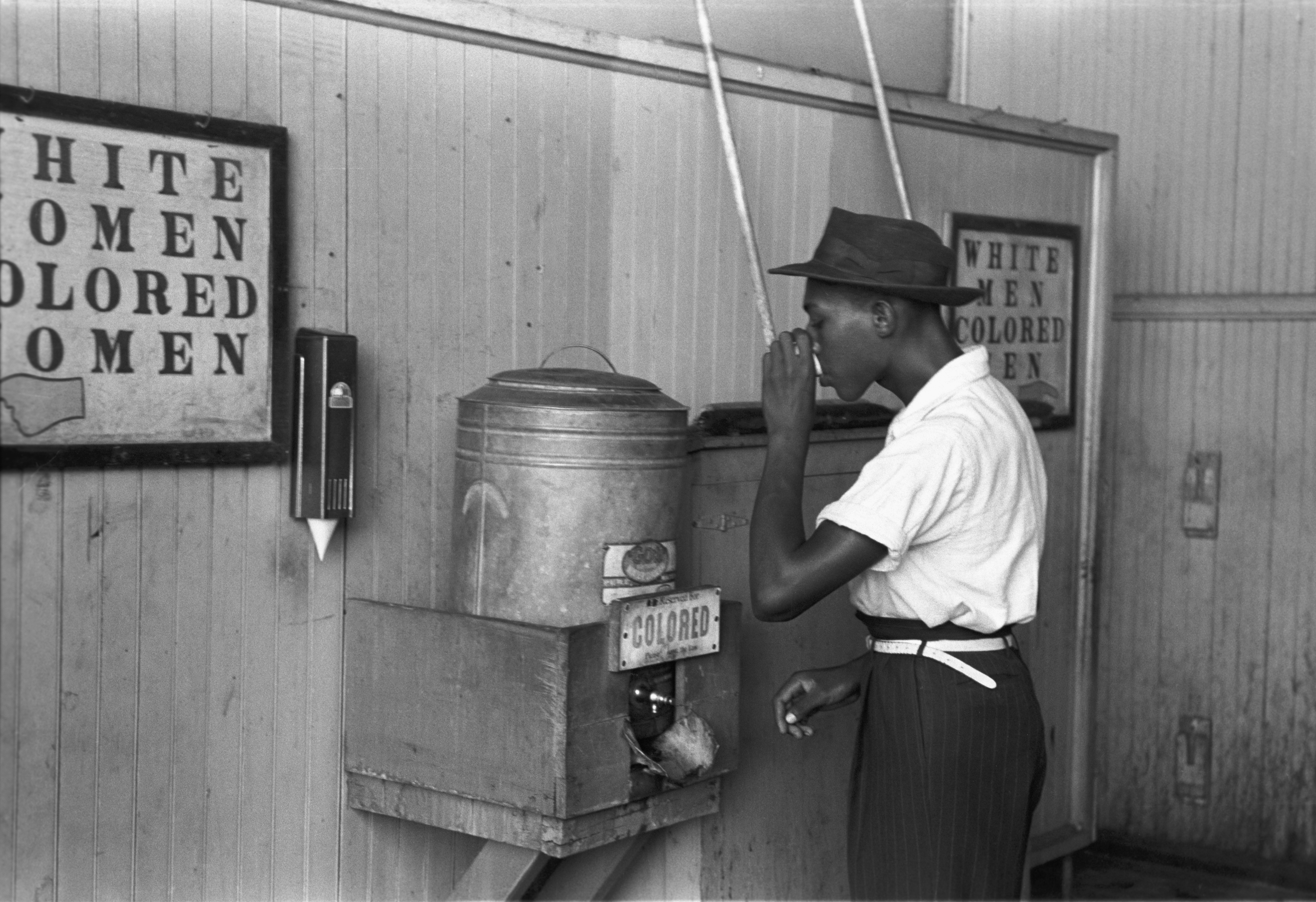
We think racism is lynching, and KKK, and separate drinking fountains and apartheid and swastikas, when in fact, racism is passing over the resume of a person of colour when they are duly qualified, or promoting skin lightening (bleaching) creams, or always pinching your nose when you walk pass a person of a certain culture because you think they “stink.”
“I’m not racist, but…”
I’ve never done an official study, but ninety-nine percent of the time whatever follows after “I’m not racist but…” is gonna be racist.
For examples, please see here, here, here and below:
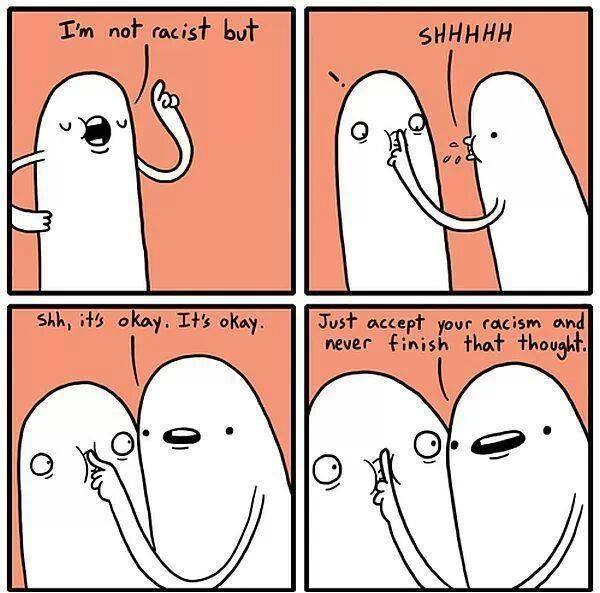
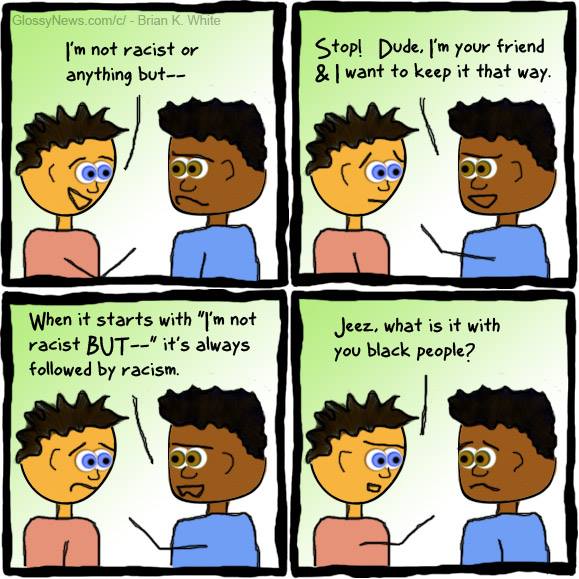
Some may say, “Well, if that’s the case many of us can be considered racist!” That’s the point. In fact, that’s why I think racism still exists. One of he reasons why racism still exists is because many of us are racist and don’t even know it. But that’s okay. We can work on this.
But “I’m really not racist!”
I couldn’t end this post without talking about the “But I’m not a racist!” excuse. It’s typically employed by people who utter ignorant and hurtful comments but swear that they are not bigots. Examples are Kelly Osbourne, the boy caught singing the racist SAE chant and this prison guard who joked about lynching President Obama.
On one hand I admit that we all have biases. I appreciate the vulnerability of this Toronto lawyer when he says:
“Those of us who are so often exposed to people of other races behaving at their worst are vulnerable to developing especially negative racist beliefs. As a criminal defence lawyer who grew up in then all-white Whitby, I have to remind myself constantly that most of my exposure to people of colour has been limited to learning about them based on their very worst moments. I have to also remind myself that my potential ignorance and misunderstanding of them is immense. I readily admit it is a constant struggle for me to function in a way I believe is free of racism.”
And if we are quite honest, it’s a struggle for many of us, myself including. We all have unconscious and subtle biases. If you don’t believe me, take these tests (Harvard Implicit Association Tests). And yet we must face the battle and the biases head on. How can we examine our own prejudices if we fundamentally dispute the notion that they lie resident in our hearts?
I am also prepared to argue that we all make mistakes. In many cases, I don’t think we can always jump to conclusions and deduce that strictly on the basis of one’s speech that one is a racist bigot. To be fair, I think one’s speech must also be seen in the context of a pattern of behavior and/or speech. Sometimes, it simply shows a person’s ignorance or lack of articulation, such that the meaning is lost in translation and the media hype sensationalists pounce, spin and twist words.
On the other hand, however, if you can find humor in the phenomenon of beating someone within an inch of their life, hanging them from a tree, castrating them, dousing them with gasoline, and, while still conscious (if only barely) setting them alight while spectators sing and chant and look upon for sport with the smell of burning flesh and blood curdling screams of death wafting in the still of the night, I do seriously have to wonder if there is any hatred in your heart. Impact cannot always be excused by intent. Moreover, my Bible tells me that out of the overflow of the heart, the mouth speaks (Luke 6:45, Matt. 12:34). This, of course, is a Biblical and not a secular principle, and is a much higher threshold in the determination of whether one is in fact racist.
More Videos I Wanted to Share Before I Conclude…
Videos that give you more info about racism:
TED Talks to Help You Understand Racism
Concluding Thoughts
Just to be clear, racism is not all about White people. Neither is it all about Black people. I’ve focused on racism against Black people because that’s the community with which I am affiliated and I am more familiar with examples that affect Black people. Of course all people of colour can fall prey to racism. In fact, White people can also be victims of racism too. Just wanted to make that clear. I also want to make it clear that it is not always “White racist perpetrator vs. Black victim.” It can also be Black racist perpetrator against Asian victim (horizontal racism). The iterations of racism are many. But it’s important to always return to our definition that hinges on stereotypes and superiority.
Not all White people are racist. Far from it. Most White people are good, decent people, as are most people in general. You don’t have to be White to be racist. You can be any colour and be racist. In fact, Black people can be racist too.
You might be saying, “Duh Simone. Nobody disputes that.” Ohhhh you’d be surprised…
Oh. And racism also happens in Canada.
I’m not trying to be a moral arbiter or a public moralist. I’m not a race relations specialist. There are still lacunae in my knowledge and there will still be things I get wrong. I’m just trying to educate myself, and as Maya Angelou says, “When you learn, teach.” This is my attempt at teaching.
I have a very good friend who so happens to be White and he once said to me, “I really feel sorry for you guys.” The comment, although well-intended, didn’t sit well with me. You guys? Who’s “you guys?” This is not my problem alone. This is not a Black people problem. This affects all of us. This problem belongs to all of us. We should be sorry for all of us. This is our problem, not just the problem of a few. In the eternal words of Dr. Martin Luther King Jr., “an injustice anywhere is a threat to justice everywhere.”
Discover more from Simone Samuels
Subscribe to get the latest posts sent to your email.

2 thoughts on “A Brief Lesson on Racism…”